Featured Course: Why They Don’t Come Back


Breaking Barriers to Continued Care | Leadership and Champion Series
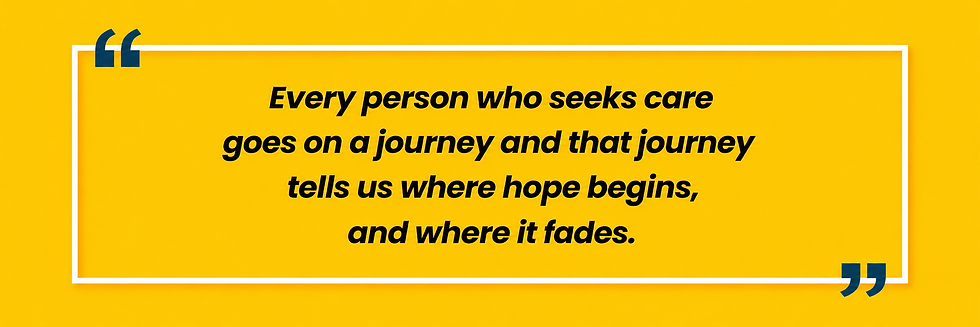
Every day, someone takes a courageous step and reaches out for help. They show up. They
engage. And then, quietly, they stop coming back.
Not because they stopped needing care. But because somewhere in the experience, something told them they did not belong.
This is one of the most persistent and least examined challenges in behavioral health. Disengagement is rarely about motivation. It is almost always about trust, and about the friction points inside organizational processes that were never built with every client in mind.
Why This Course Exists
Most organizations measure retention. Far fewer examine what is actually happening between visit one and visit two, where the gap between intended care and experienced care is widest, and where clients make the quiet decision to return or disappear.
Why They Don’t Come Back gives leaders the tools to see what clients see, name what clients feel, and change what clients experience. It is designed for supervisors, managers, and identified trust champions who shape the culture clients actually encounter, and who have the authority to do something about what they find.
The focus is on what actually drives disengagement: unmet expectations, communication and cultural mismatch, inflexible processes, and the small moments where clients sense they are not fully understood or welcomed. These are operational challenges. And they have operational solutions.
What Participants Experience
This course is designed as a two-part experience, and adaptable based on your team’s needs and goals. However it is structured, it always moves from awareness to action. Participants do not simply learn about disengagement. They walk through it.
In the first phase, participants conduct a structured Client Journey Audit, tracing the experience of real client profiles through every stage of care, from referral through retention. They identify the hidden friction points where clients lose trust, feel unseen, or encounter barriers that persist despite good intentions.
In the second phase, the work shifts from diagnosis to change. Participants practice coaching conversations designed to surface and address trust gaps with their teams, and build a concrete action plan connecting organizational policy directly to client outcomes.
Throughout, the approach is grounded in current research on disengagement and client retention. The tone is honest, human, and built around shared responsibility rather than blame.
What This Course Is For
Why They Don’t Come Back is built to meet organizations at every level of the house. The core content adapts to the audience in the room, so the insight lands where it can actually be used.
The Leadership Track focuses on systems and structures. Senior leaders examine how organizational policy, resource allocation, and cultural norms shape the client experience at scale.
The Manager Track focuses on accountability and ownership. Frontline managers develop the skills to identify friction in their own departments, coach their teams through it, and take concrete action on what they find.
The Frontline Track focuses on implementation. Direct service staff explore how their day-to-day interactions either build or erode client trust, and leave with practical tools for strengthening engagement in real time.
Organizations can bring in a single track or sequence all three for a coordinated approach that builds alignment from the top of the organization to the point of care.
The Goal Is Not Awareness. It Is Change.
Understanding why clients disengage is only useful if it leads somewhere. This course is designed to make sure it does. Participants leave with a sharper eye for friction, stronger tools for coaching their teams, and a clear path for turning insight into the kind of consistent organizational practice that brings people back.
Because when clients see themselves reflected in the systems meant to serve them, they stay.
Book a 15-Minute Quick Win Consult to learn more.


Comments